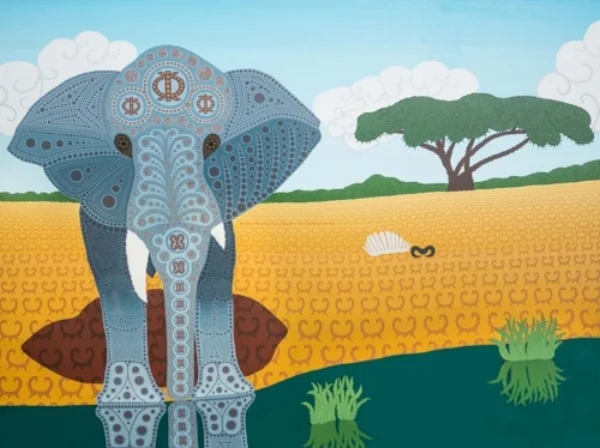
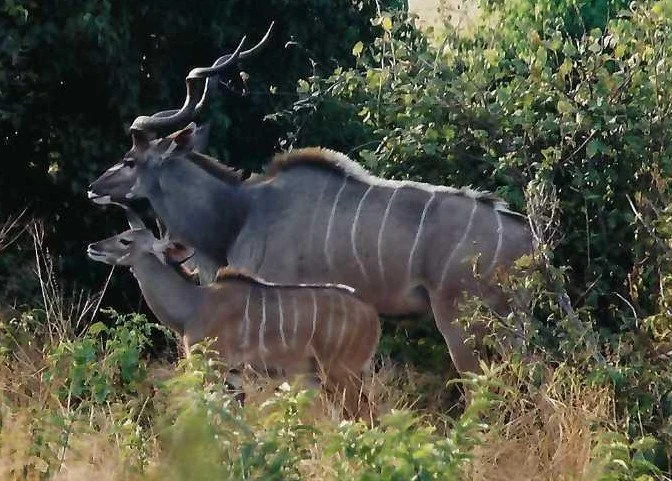
During a trip in a small boat down the Chobe River in Botswana, we floated silently with the current and were able to observe all kinds of wildlife up close and personal. Not only did we see the large elephant that I previously painted in Chobe Checker, we also saw a family of the famously reclusive kudus. Below is our picture of an adult male kudu with its younger offspring along the edge of the river.
Kudus are beautiful animals that are known for their magnificent long curled horns. They are considered to be spiritual animals in Africa as described in the following quote:
“The kudu represents inner strength and resilience. Known for its ability to survive in the challenging African wilderness, the kudu symbolizes the courage to face adversity and emerge victorious. The antelope’s calm yet powerful nature reflects the importance of maintaining balance and peace, even in difficult circumstances. Spiritually, the kudu encourages individuals to harness their inner strength and rise above challenges with grace and dignity.”
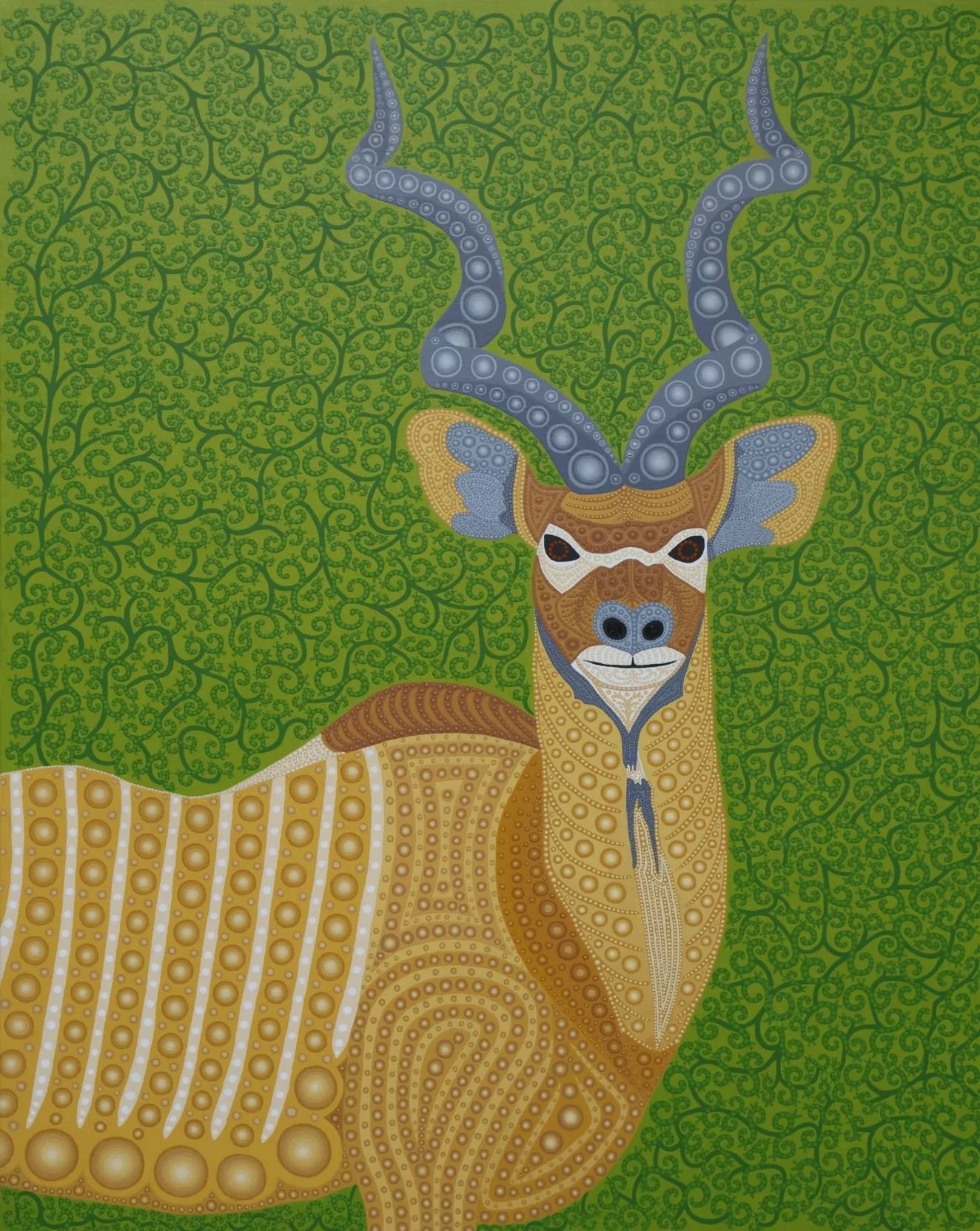
I decided to focus my painting on a single adult male kudu with a fully developed set of horns. As always, I painted my interpretation of the beauty and strength of the kudu using my Contextural style which uses a multitude of intricate layers of patterns and dots of various colors combined to create the completed image.
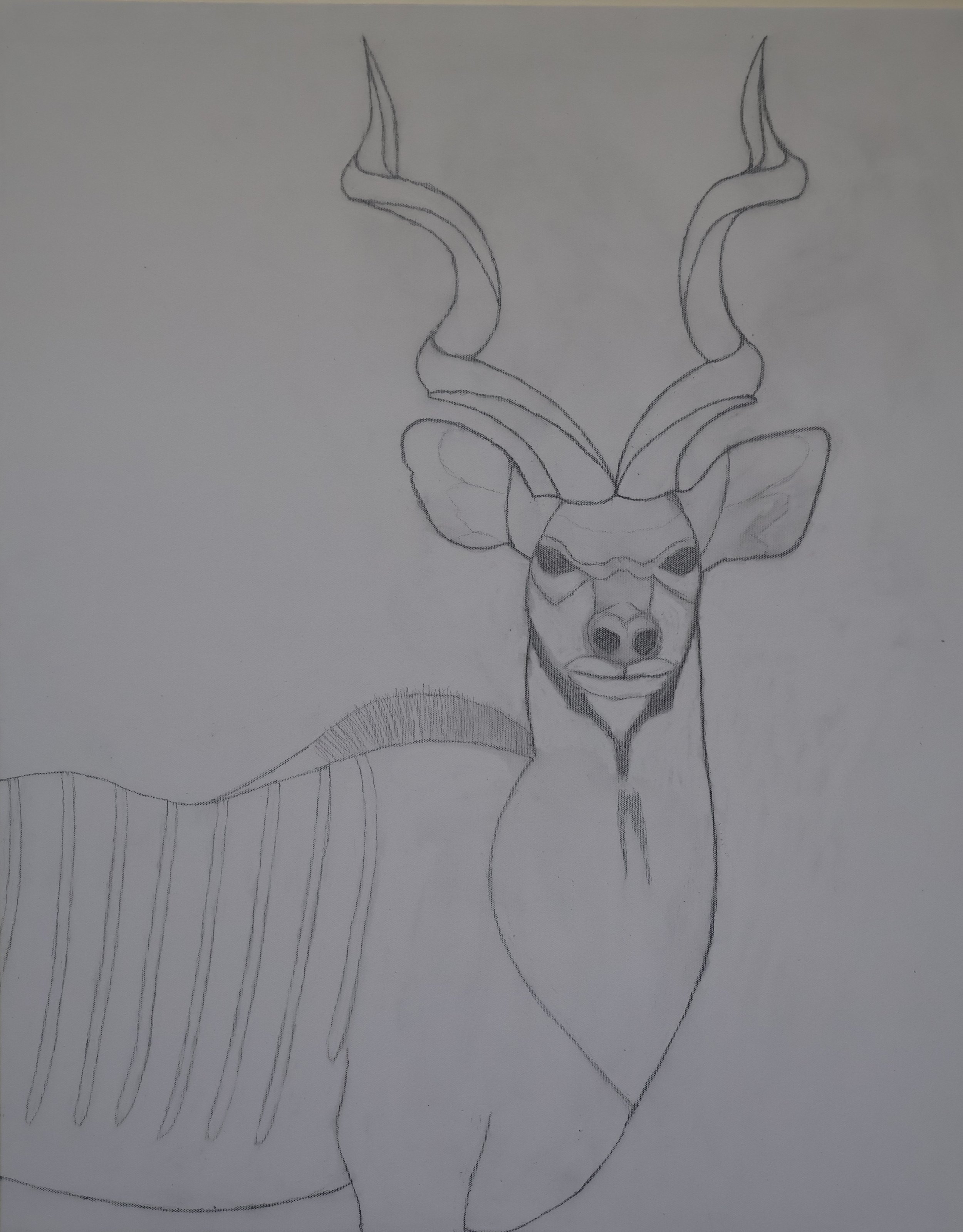
I started by drawing a pencil sketch of the basic layout of the image onto the canvas.
Next, I added all of the different base layers of color.
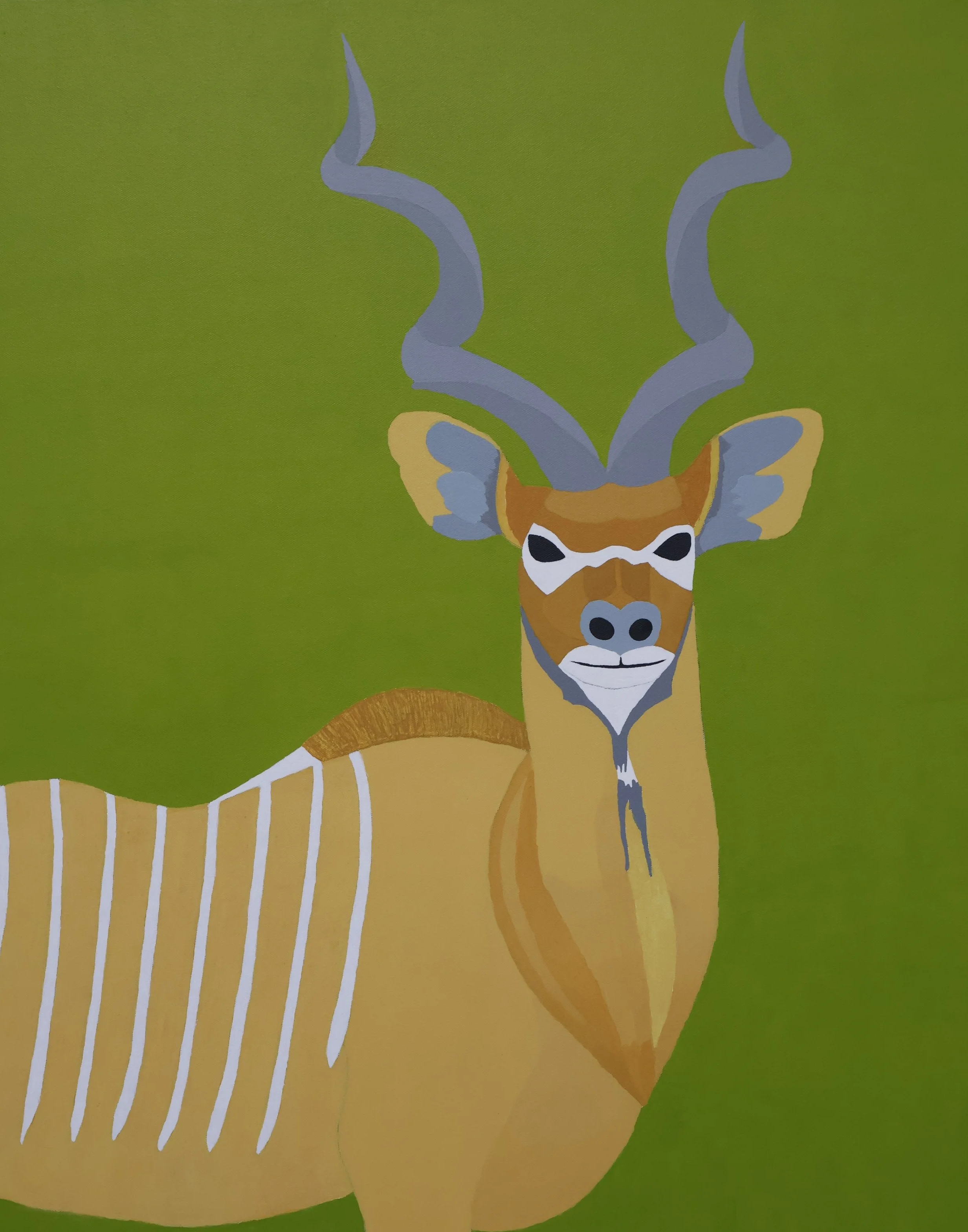
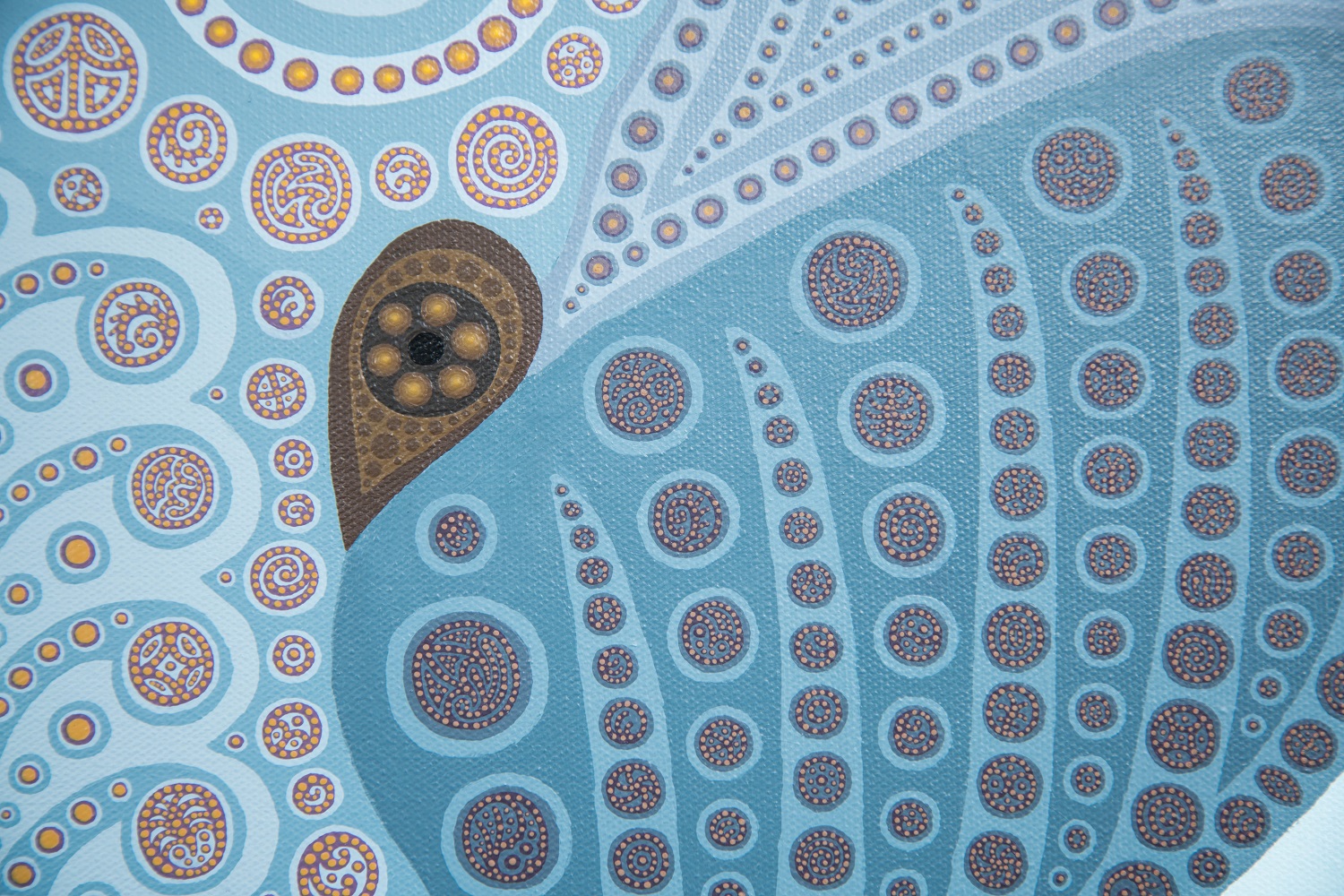
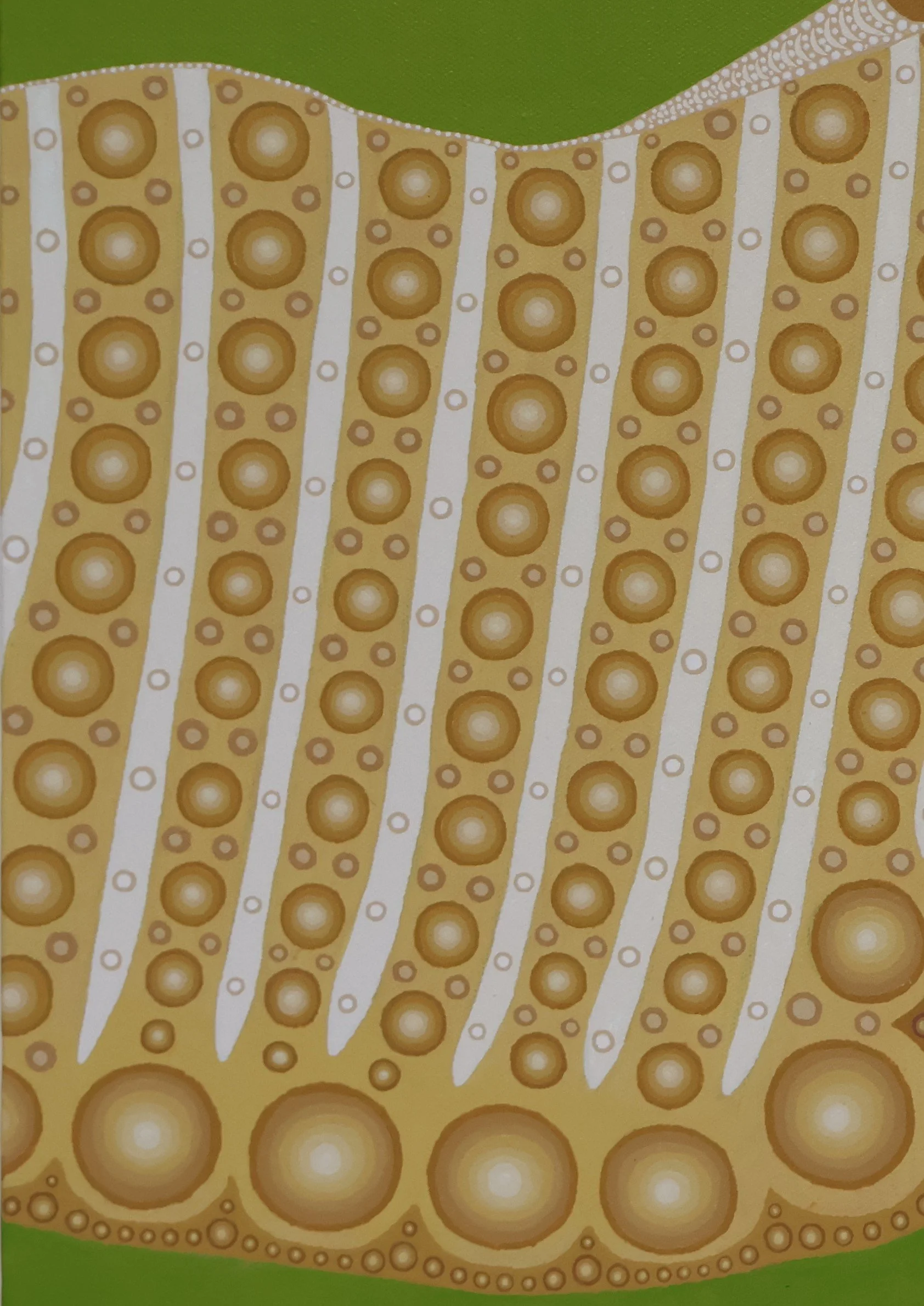
I then started creating the Contextural patterns on top of the base layers. The white stripes on the kudu’s side form a single large pattern. I first added a number of large circles within the tan areas of this pattern.
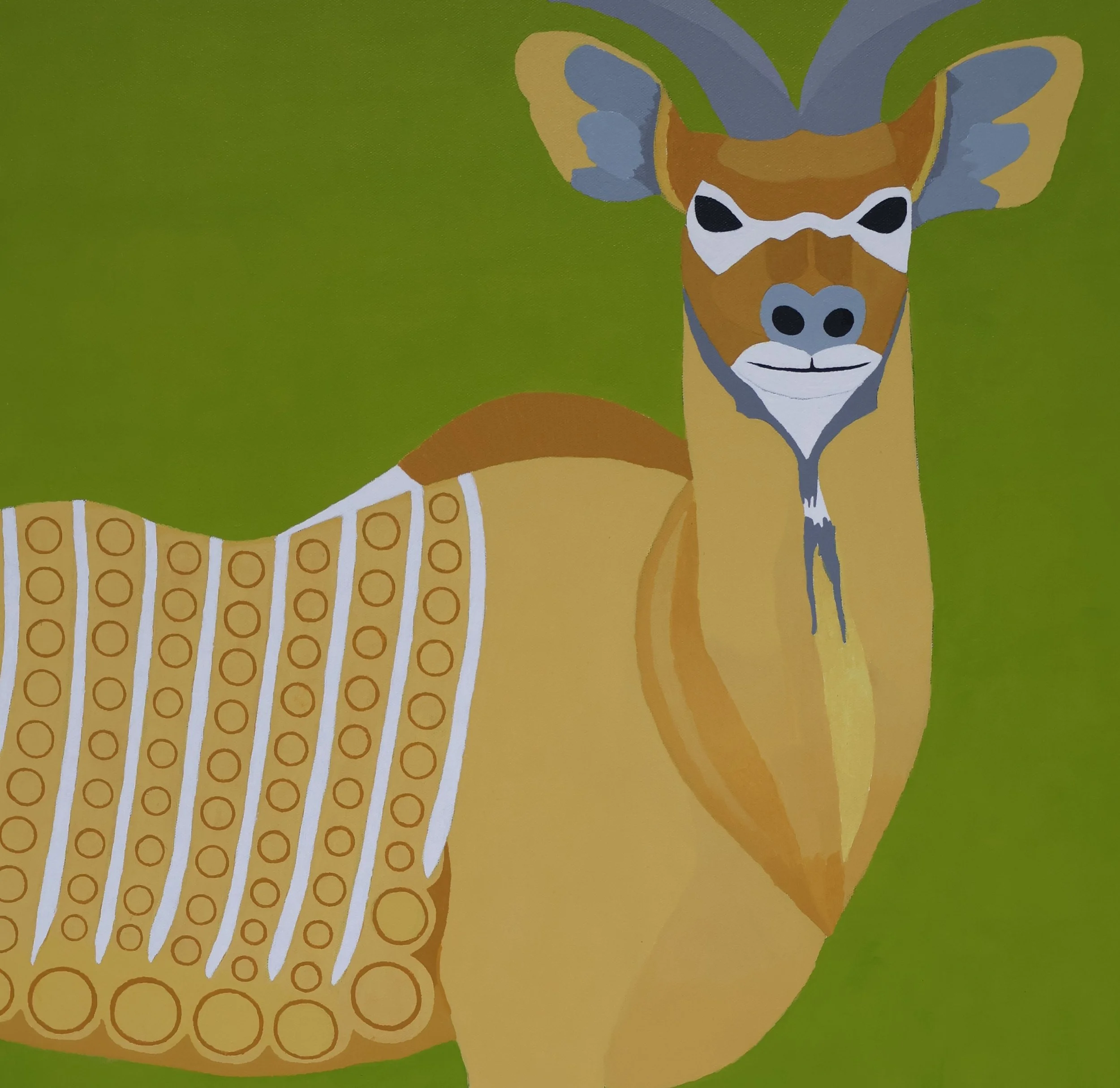
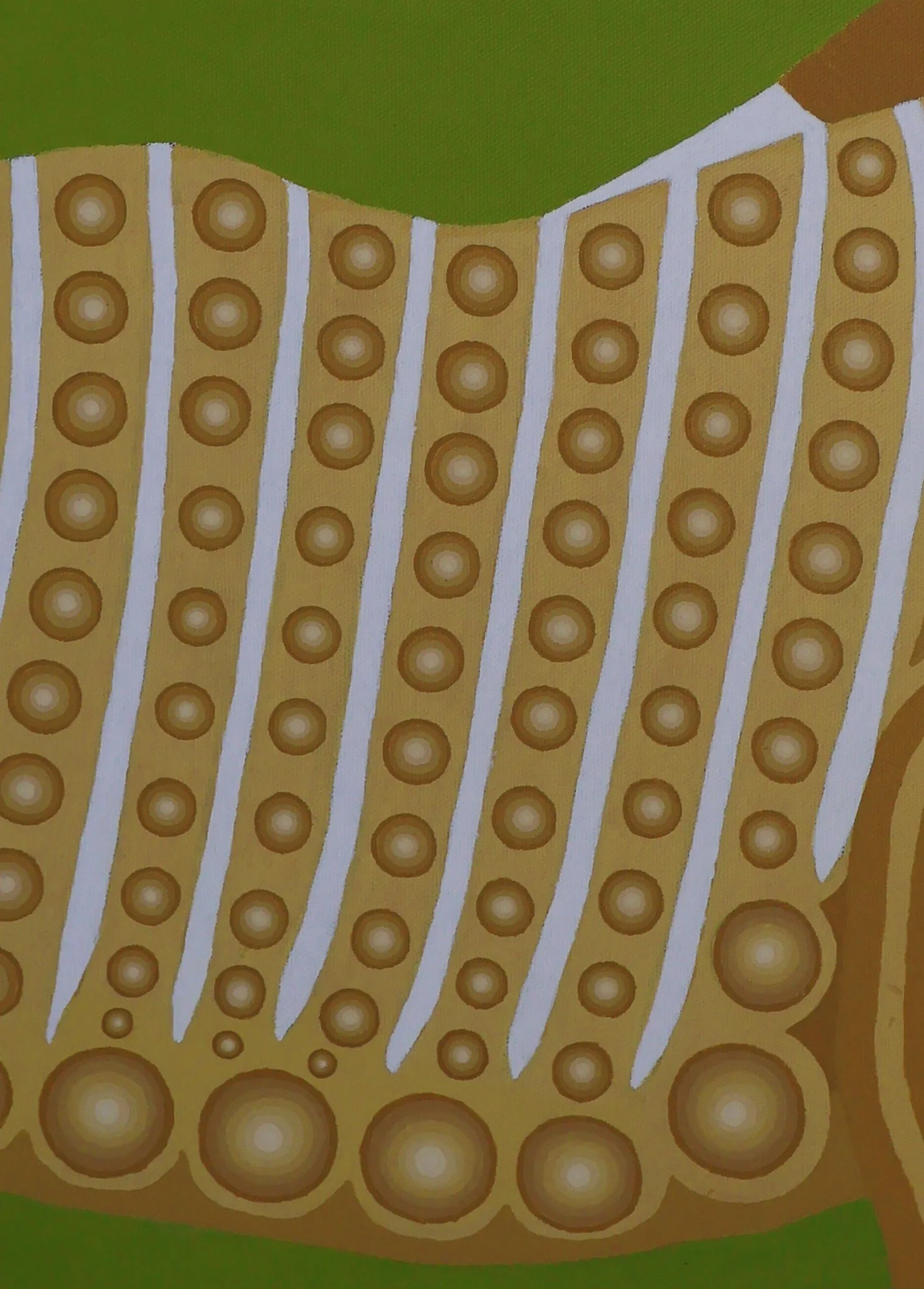
I then increased the texture and color within each of these circles by adding a series of smaller, lighter colored inner circles.
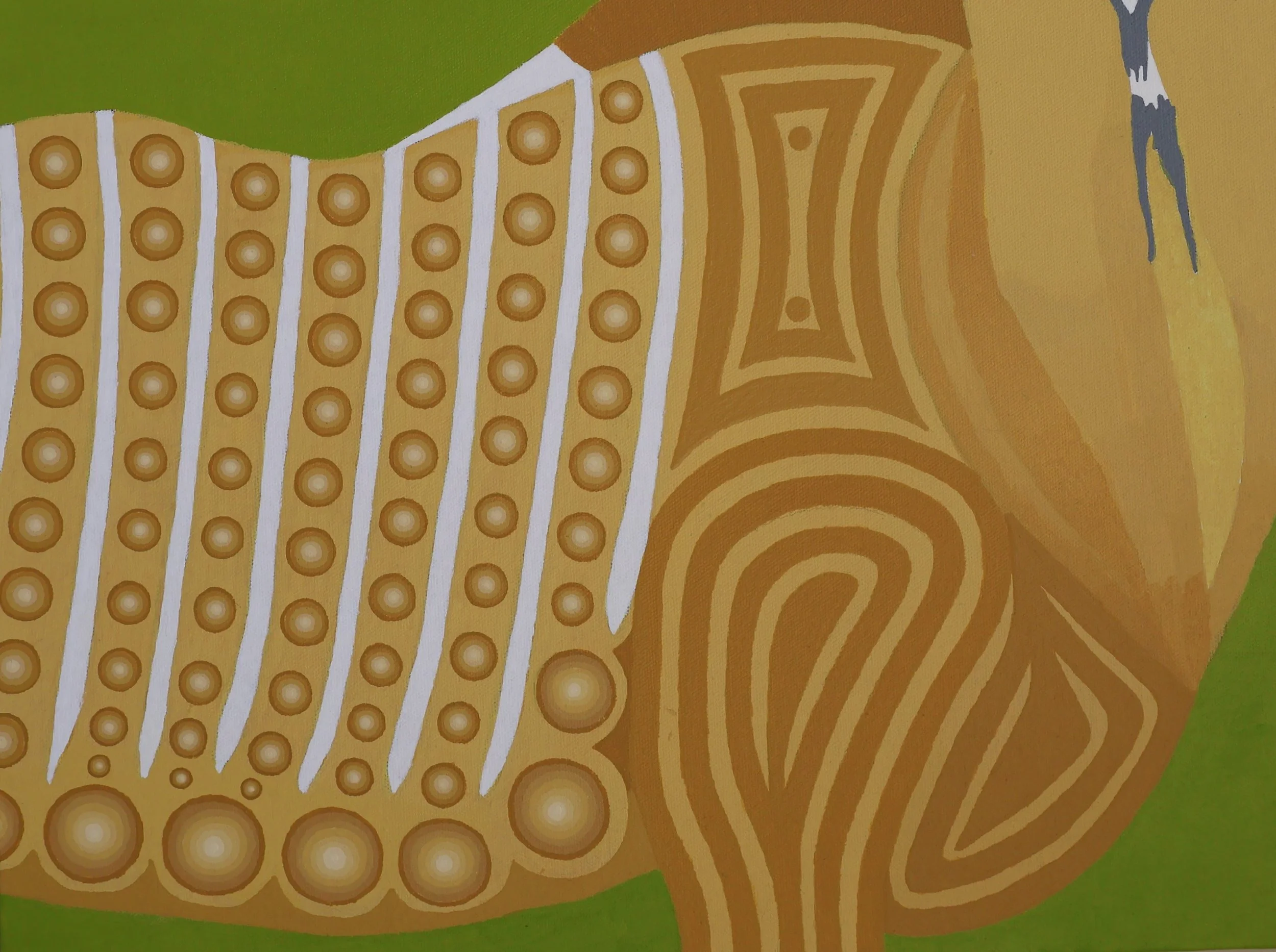
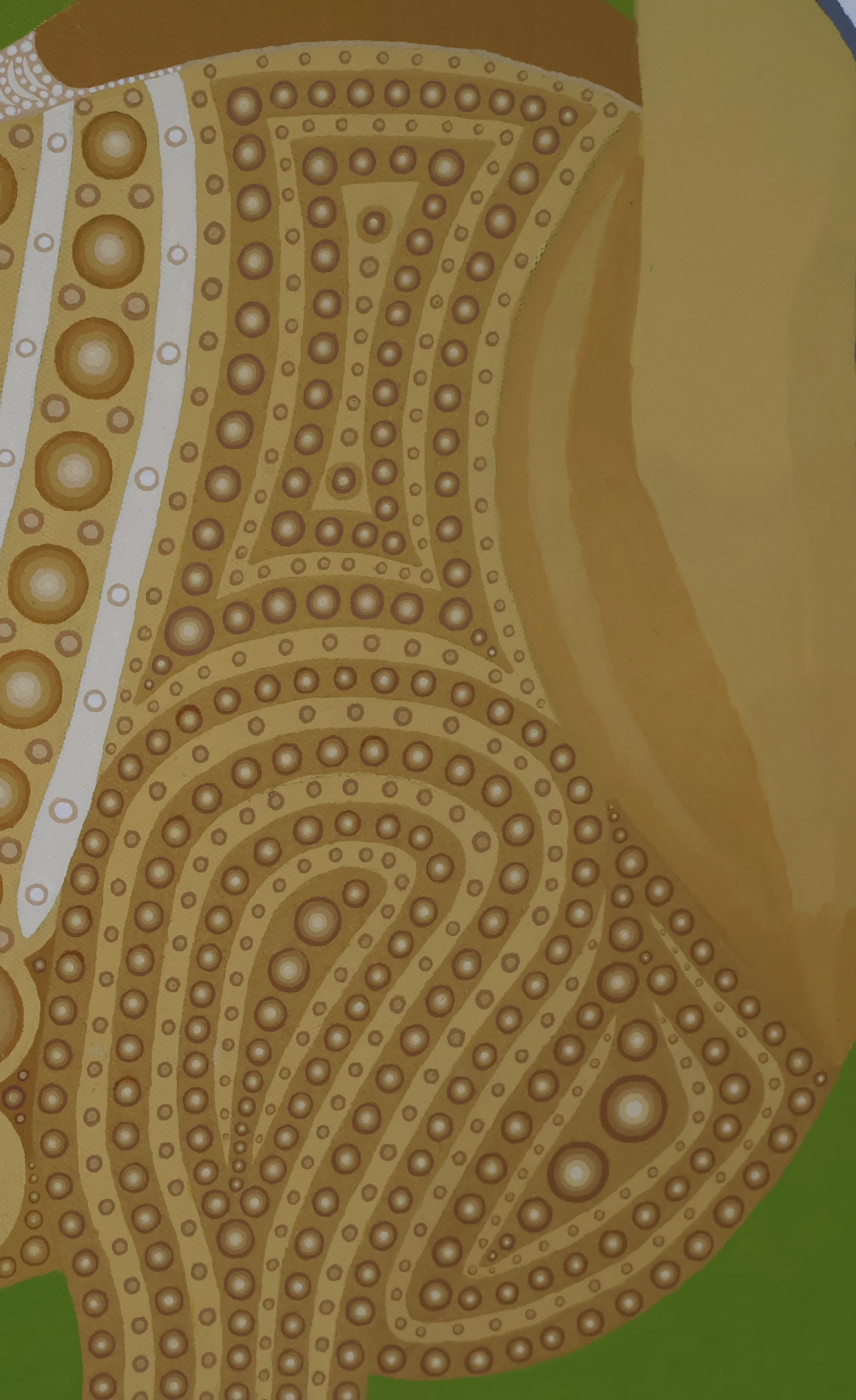
I moved on by adding patterns to the shoulder and upper leg.
Additional smaller circles were also added to both the white stripes and the tan stripes in the original large side pattern to further increase the texture.
Then textured circles were added on top of the patterns on the shoulder and upper leg.
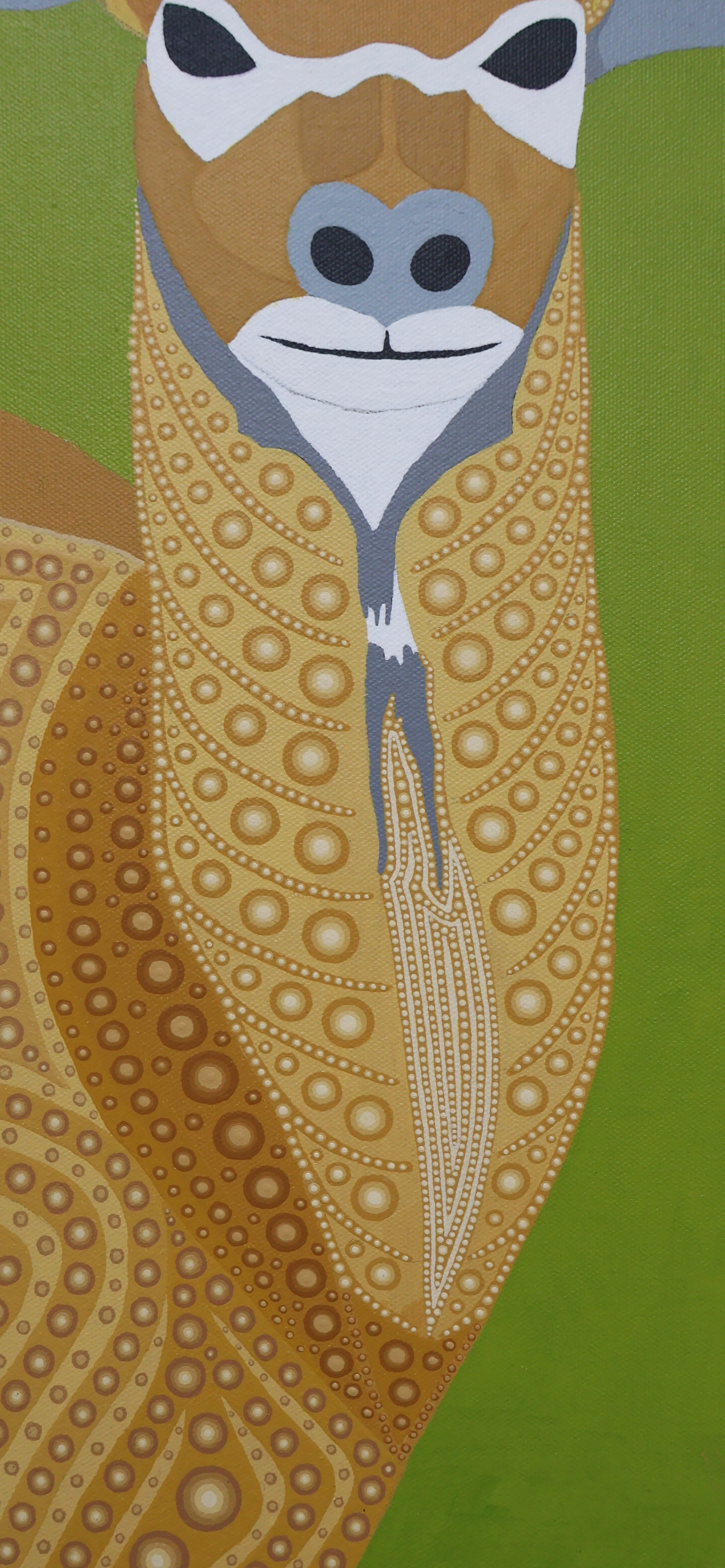
Similar patterns and circles were painted on the neck.
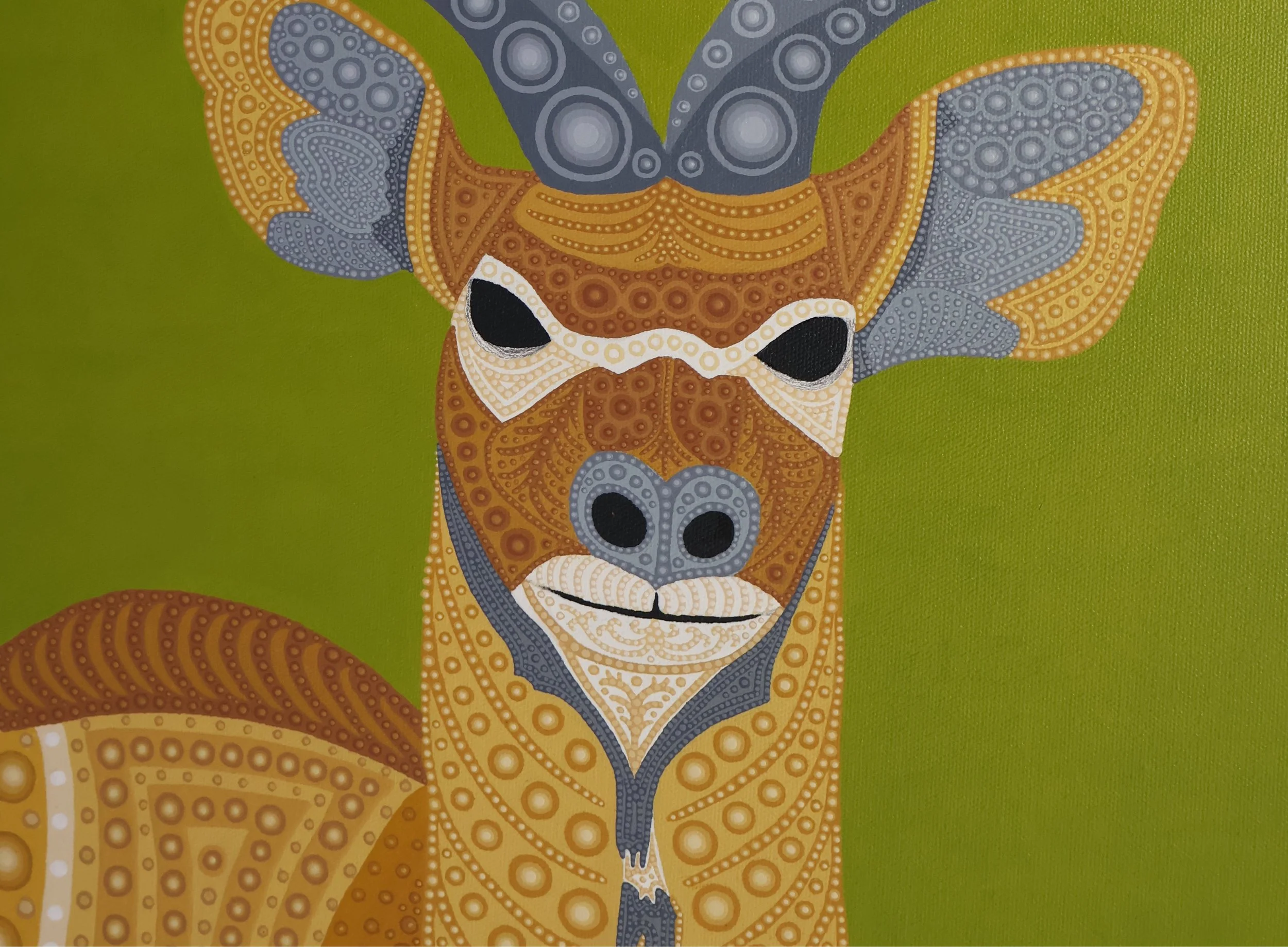
Next, I painted patterns and circles on top of the tan areas of the kudu’s face and ears.
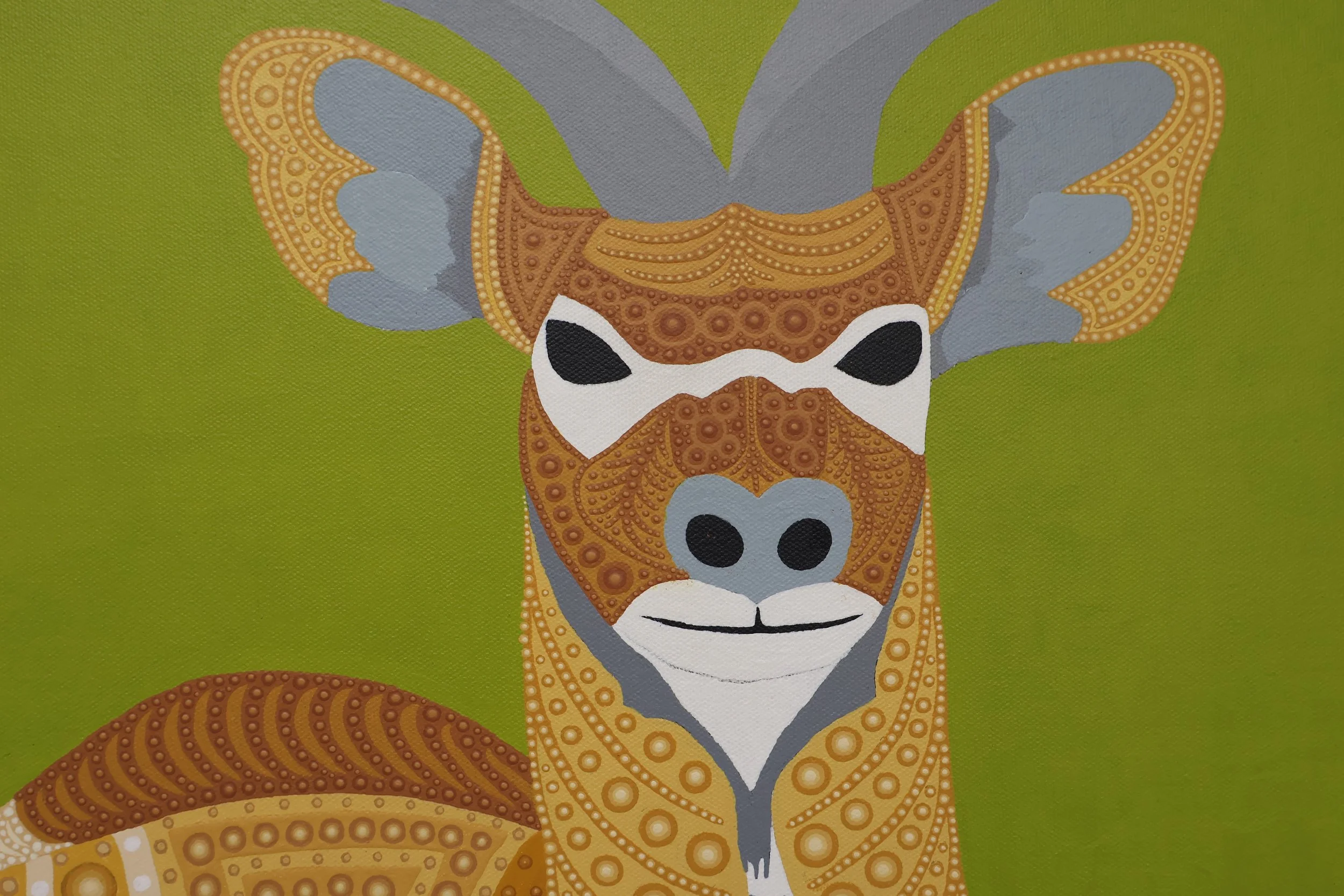
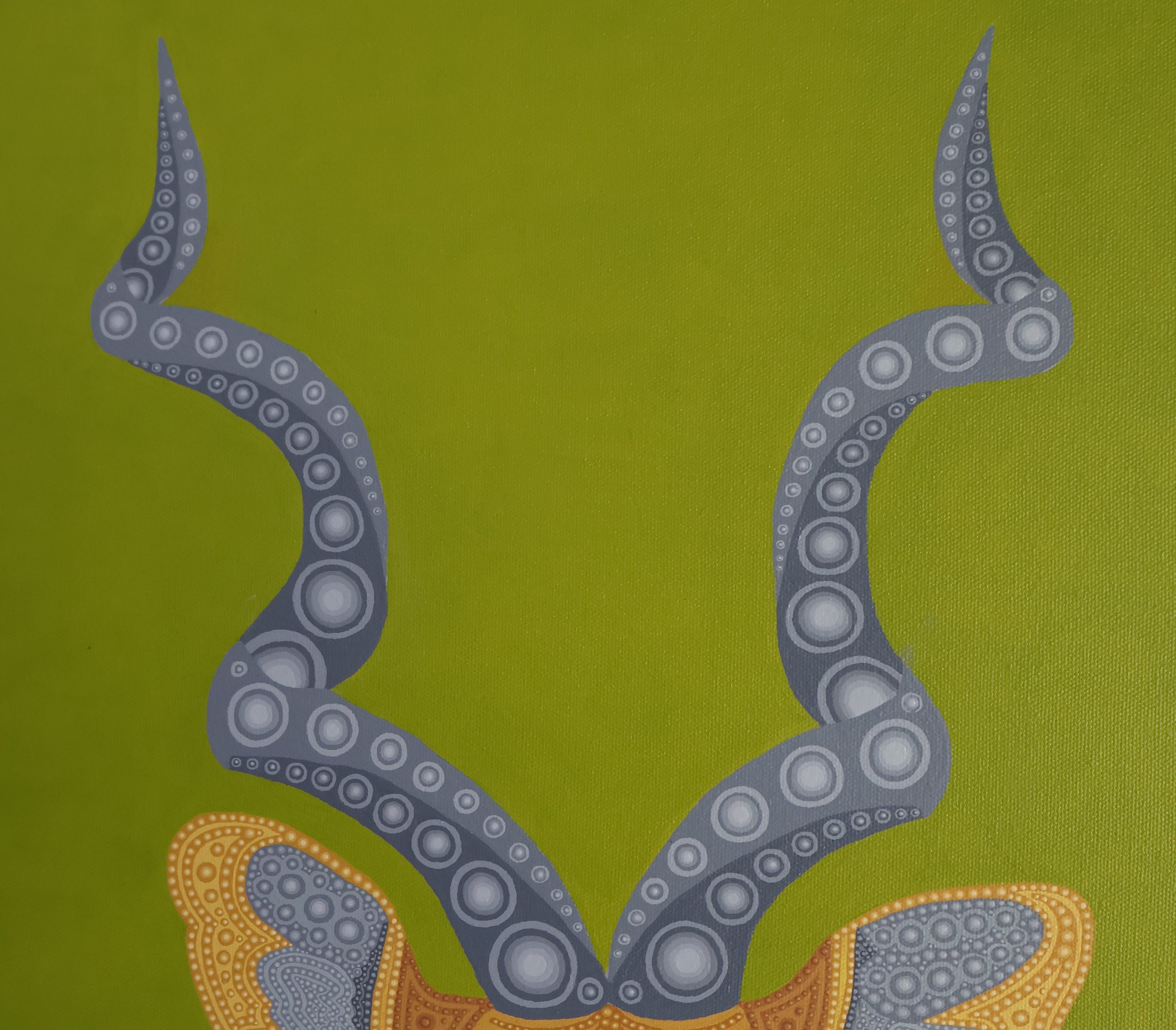
The remaining parts painted on the kudu were the addition of patterns and circles onto first the curled horns,
and then onto the areas around the nose, ears, eyes, mouth and chin.
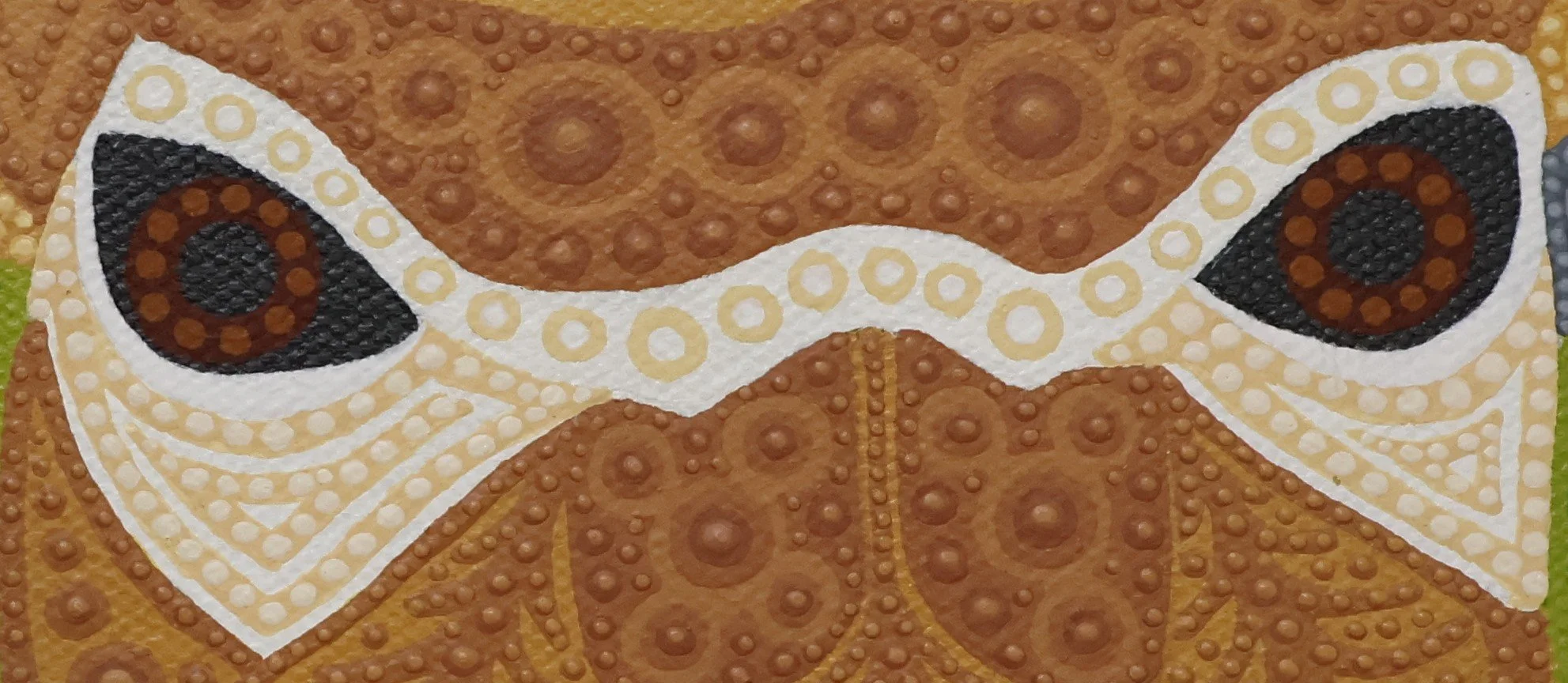
The important final step to the kudu’s face was a circle of small circles in each of his eyes. This completed the kudu portion of the painting.
Next to come was the background.
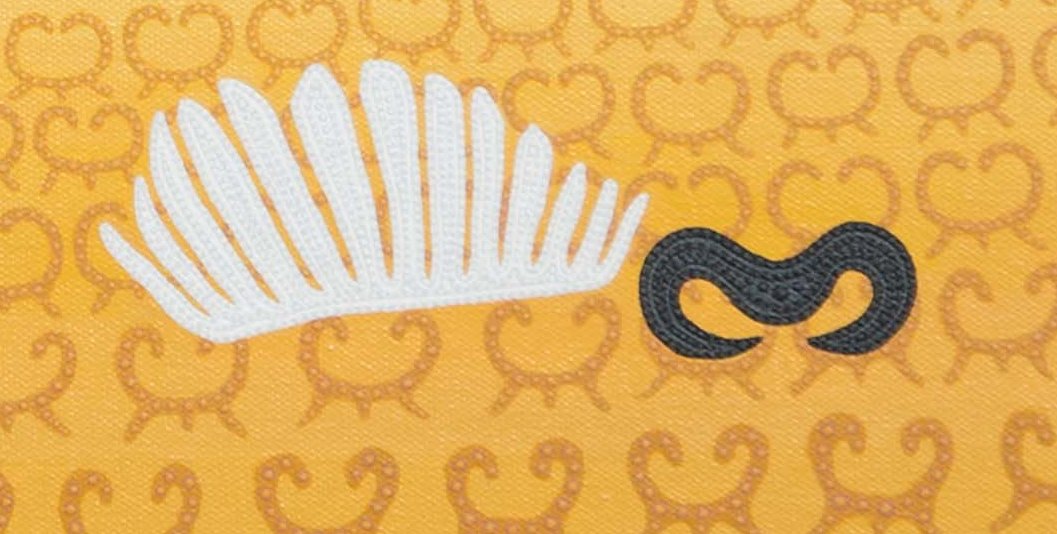
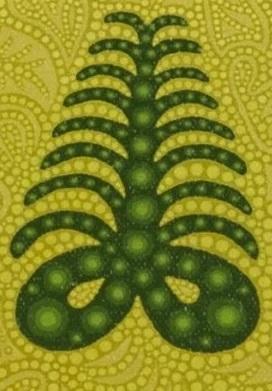
Foliage is the logical background for kudus as they spend most of their time eating amid thickets of small trees and bushes. I try to use relevant symbols in my paintings whenever possible and there are many African symbols to choose from. I found one symbol, the Ahoden, that seems particularly appropriate. The symbol represents inner strength, endurance and vitality which are characteristics used to describe kudus. The Ahoden symbol is shown below.
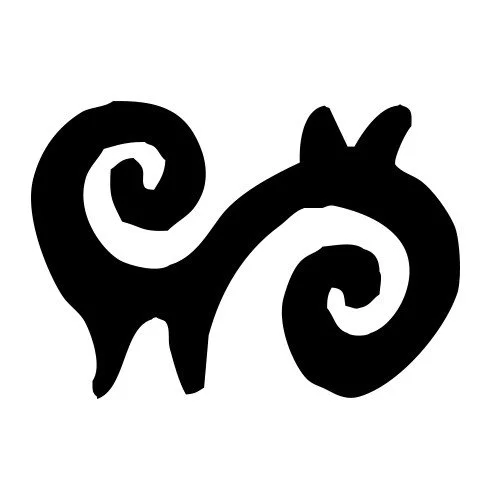
Ahoden Symbol: Representing Strength, Endurance, Vitality
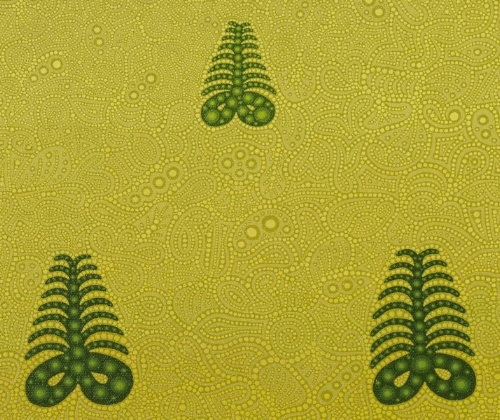
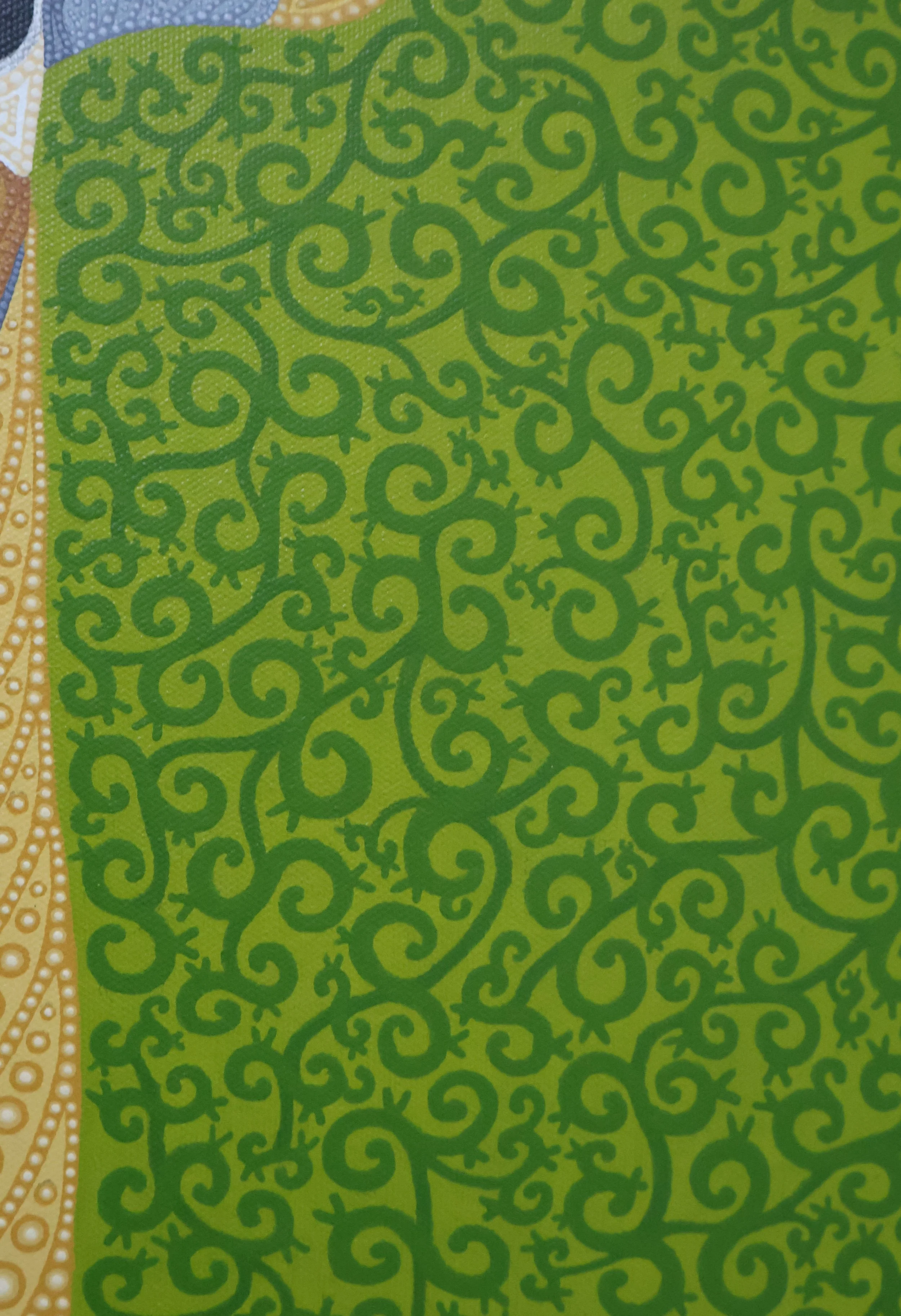
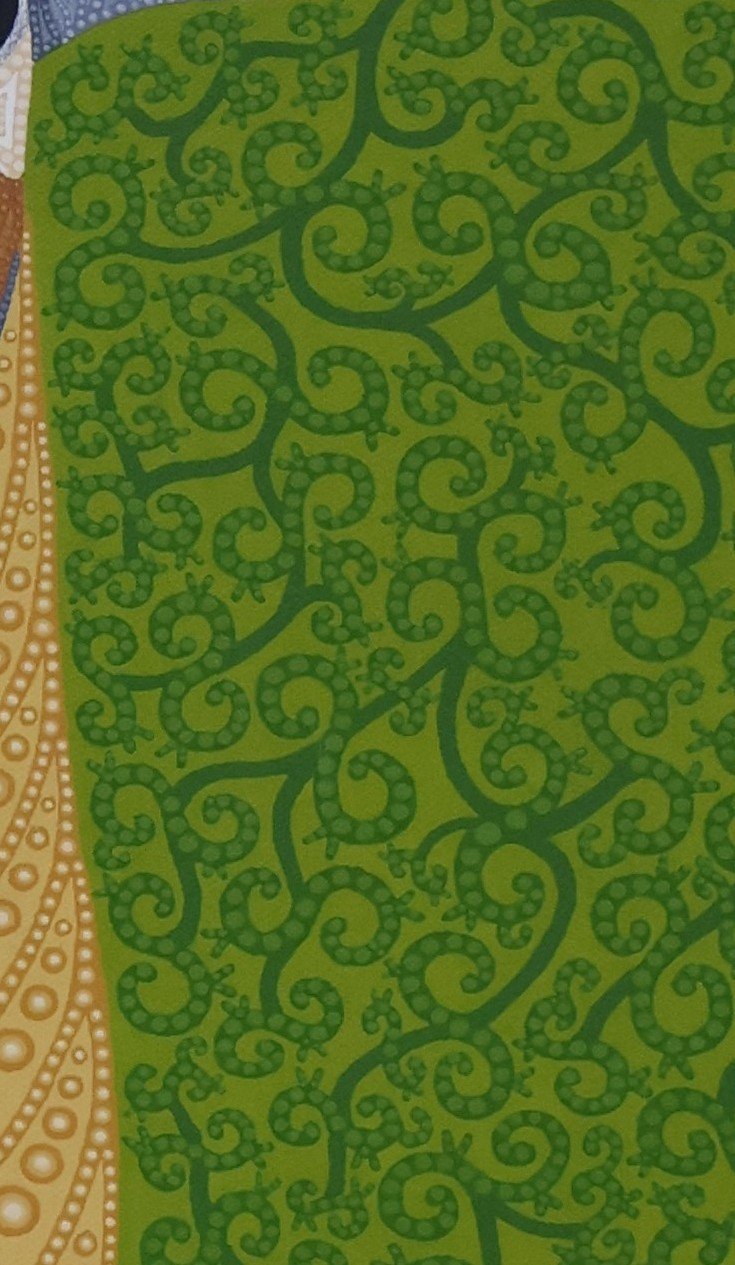
I decided to use the Ahoden symbol in the foliage background for this painting. To create the foliage, I painted vines that wrap around the entire background of the canvas. I then used a variety of Ahoden symbols of different sizes and directions as the leaves on these vines.
Below is a closeup of a portion of these vines with the Ahoden symbols as the leaves.
To further differentiate the Ahoden symbols from the vines, I painted lighter dots onto the symbols but not the vines.
Here is my completed painting Kudu.
I hope you have enjoyed reading about how I turned my fond memory of seeing a family of kudus in the wild into this painting. A kudu is truly one of the most impressive animals I’ve ever seen, and I am proud to have created my personal interpretation of their majesty.